Behavior Support Toolkit for Teachers: A Practical Guide to Calm, Connected Classrooms
We have all been there. The bell rings, the room settles, and then a student’s desk flips over, or another child shuts down completely in the corner. For years, the default response in many educational settings was to punish, isolate, or escalate the situation. But as educators become more aware of trauma-informed practices and neurodiversity-affirming frameworks, it is clear that punishment rarely teaches the skills students actually lack. Instead, it often triggers further dysregulation.
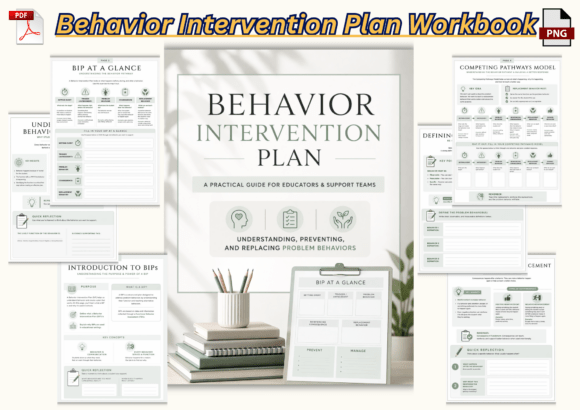
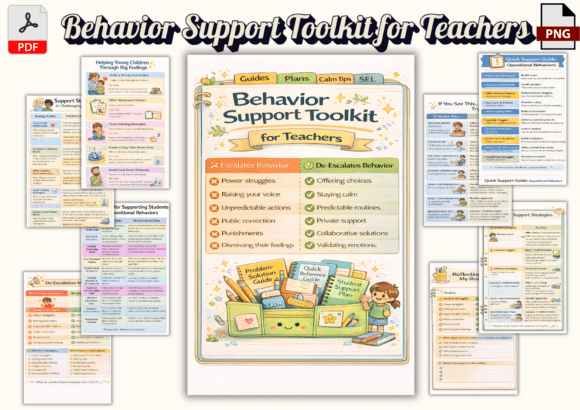
This is where the Behavior Support Toolkit for Teachers Printable 6x9 Classroom Strategy Bundle steps in. It is not just another stack of worksheets to add to an already overflowing inbox. It is a professionally designed, 16-page resource created specifically for teachers, aides, CRTs (Casual Relief Teachers), and school leaders who are looking for practical, proactive strategies to manage challenging behaviors with dignity and safety. By focusing on regulation, connection, predictability, and skill-building, this toolkit helps shift the classroom dynamic from reactive chaos to calm consistency.
Why This Toolkit Works When Traditional Methods Fail
Traditional behavior management often relies on a deficit model: "The student did something wrong; therefore, they lose a privilege." However, when a child acts out, it is frequently because their nervous system is overwhelmed. They are not choosing to be difficult; they are struggling to cope. The Behavior Support Toolkit for Teachers addresses this by providing tools that prioritize nervous system safety.
The bundle is structured around clarity and simplicity. In the heat of the moment, teachers do not have time to read lengthy theoretical texts. They need quick, actionable references. That is why this resource includes core strategy sheets, quick-reference cheat sheets, and decision-mapping pages. These tools allow educators to move away from punitive measures and toward interventions that help students regulate and re-engage with learning.
Who Benefits Most From This Resource?
One of the strongest aspects of this 16-page PDF and PNG bundle is its versatility. Education is not a monolith, and neither are the challenges classrooms face. This toolkit is designed to be adaptable across various educational levels and roles.
- Primary and Early Years Teachers: With specific simplified strategy cards for ages 4–8, younger educators get age-appropriate visual aids that help little ones identify emotions and choose calming actions without needing complex verbal processing.
- Upper Primary and Middle School Educators: As students enter early adolescence, the social stakes rise. The bundle includes independence-focused supports for ages 9–12, helping older students navigate more complex social dynamics and emotional regulation.
- CRTs and Substitute Teachers: There is nothing quite like walking into a new classroom with no context for the students' needs. The CRT-friendly quick-reference cheat sheet is a lifesaver here, offering immediate access to de-escalation techniques and support strategies without needing prior knowledge of individual students.
- Special Education and Learning Support Teams: For staff working with neurodiverse learners, the neurodiversity-affirming classroom supports section provides essential guidance on sensory needs and communication styles that respect cognitive differences rather than trying to force conformity.
- School Wellbeing Leaders: Principals and wellbeing coordinators can use the reflective teacher practice worksheet and home-school consistency page to support staff development and ensure that behavior policies are implemented consistently and compassionately across the school.
Real-World Scenarios: Putting the Toolkit to Use
To understand the true value of this bundle, it helps to look at how it functions in real-world situations. Imagine a Year 5 class where one student, let’s call him Leo, has a history of explosive outbursts when given multi-step instructions. Using the Problem–Solution Decision Mapping Page, a teacher can break down Leo’s trigger (complex instructions) and map out a solution (breaking tasks into single steps and using visual timers). This moves the focus from "Leo is being disruptive" to "Leo needs scaffolding."
Consider another scenario involving a new relief teacher. She walks into a Year 3 class where two students are arguing loudly. Instead of guessing which disciplinary approach will work, she pulls out the Escalation vs De-escalation Comparison Chart. She quickly identifies that raising her voice would escalate the situation. Instead, she uses the suggested de-escalation tactics—lowering her volume, giving space, and offering a choice—which effectively calms the room within minutes.
For special education staff, the Individual Student Support Plan Template offers a structured way to document what works for a specific child. If a student becomes overwhelmed by fluorescent lighting, the plan might include a designated quiet corner and noise-canceling headphones. This template ensures that these accommodations are consistent, whether the student is with the main teacher, an aide, or a substitute.
Key Features That Drive Classroom Success
The toolkit is comprehensive, covering every stage of the behavioral cycle. Here is a closer look at some of the standout components included in the 16-page bundle:
Trauma-Informed Response Framework
This section is crucial for any educator working with students who have experienced adversity. It guides teachers on how to respond to behaviors that stem from fear or past trauma, emphasizing safety and trust over compliance. It helps educators recognize that a "bad behavior" might actually be a survival response.
SEL Self-Regulation Instruction Guide
Self-regulation is a skill that must be taught, not expected. This guide provides educators with scripts and activities to explicitly teach students how to recognize their own emotional states and apply coping strategies. It turns abstract concepts like "calm down" into concrete actions like "take three deep breaths" or "squeeze a stress ball."
Home–School Consistency Page
Behavior is often most challenging when there is a disconnect between home and school environments. This page offers a simple format for communicating with parents or caregivers about behavior plans, ensuring that everyone is on the same page regarding expectations and rewards. This consistency reinforces positive behavior both at school and at home.
Reflective Teacher Practice Worksheet
Finally, the toolkit acknowledges that teachers are human too. Burnout is real, and managing challenging behaviors can be emotionally draining. The reflective worksheet encourages educators to pause and consider their own reactions, helping them maintain their own emotional regulation so they can better support their students.
Practical Considerations Before You Start
While this Behavior Support Toolkit for Teachers is a powerful resource, it is important to approach its implementation with intention. It is not a magic bullet that will instantly fix every behavioral issue in a classroom. Rather, it is a scaffold that supports the broader goals of creating a safe and inclusive learning environment.
Before diving in, consider your current classroom culture. Are you ready to shift from a punitive mindset to a supportive one? The toolkit requires a willingness to view behavior through a lens of curiosity rather than judgment. Additionally, while the digital PDF and PNG formats offer flexibility for printing and customization, remember that the effectiveness of these tools depends on how consistently they are used. Pick one or two strategies to start with, such as the de-escalation chart or the self-regulation guide, and master those before adding more complexity.
It is also worth noting that while the toolkit is designed to be broadly applicable, every classroom is unique. What works for one student may not work for another. The Individual Student Support Plan template is particularly useful here, allowing you to tailor the general strategies to meet specific individual needs. This personalization is key to making the toolkit truly effective.
Making a Lasting Impact
The ultimate goal of any behavior support strategy is to create a classroom where every student feels seen, safe, and capable. The Behavior Support Toolkit for Teachers Printable 6x9 Classroom Strategy Bundle provides the practical tools needed to make that vision a reality. By combining trauma-informed principles with neurodiversity-affirming practices, it empowers educators to lead with empathy and expertise.
Whether you are a seasoned veteran looking to refresh your approach or a new teacher seeking a reliable framework, this 16-page bundle offers a concise, professional, and highly usable resource. It respects the complexity of teaching while providing clear pathways to manage the inevitable challenges of classroom life. In a world where mental health and emotional well-being are increasingly prioritized, having a toolkit that aligns with these values is not just helpful—it is essential.